Correction (2026-07-23): An earlier version of this article said Richmond stayed at the bottom of all 132 divisions every year. Virginia had 130 divisions reporting 2023 data, and Richmond ranked lowest in four of the five years. In 2021 Prince Edward County had the lowest rate.
Richmond City↗ET graduated 72.4% of its students in 2023, the lowest rate of any division in Virginia. Its 23.8% dropout rate was nearly five times the state average of 5.4%.
Those are the division-level numbers. The school-level numbers are worse.
George Wythe High: A Coin Flip Between Graduating and Dropping Out
At George Wythe High, 47.1% of the 401 students in the 2023 cohort graduated. Another 48.4% dropped out. The remaining students were still enrolled or had transferred. In practical terms, a student entering George Wythe's senior cohort was almost equally likely to leave without a diploma as to receive one.
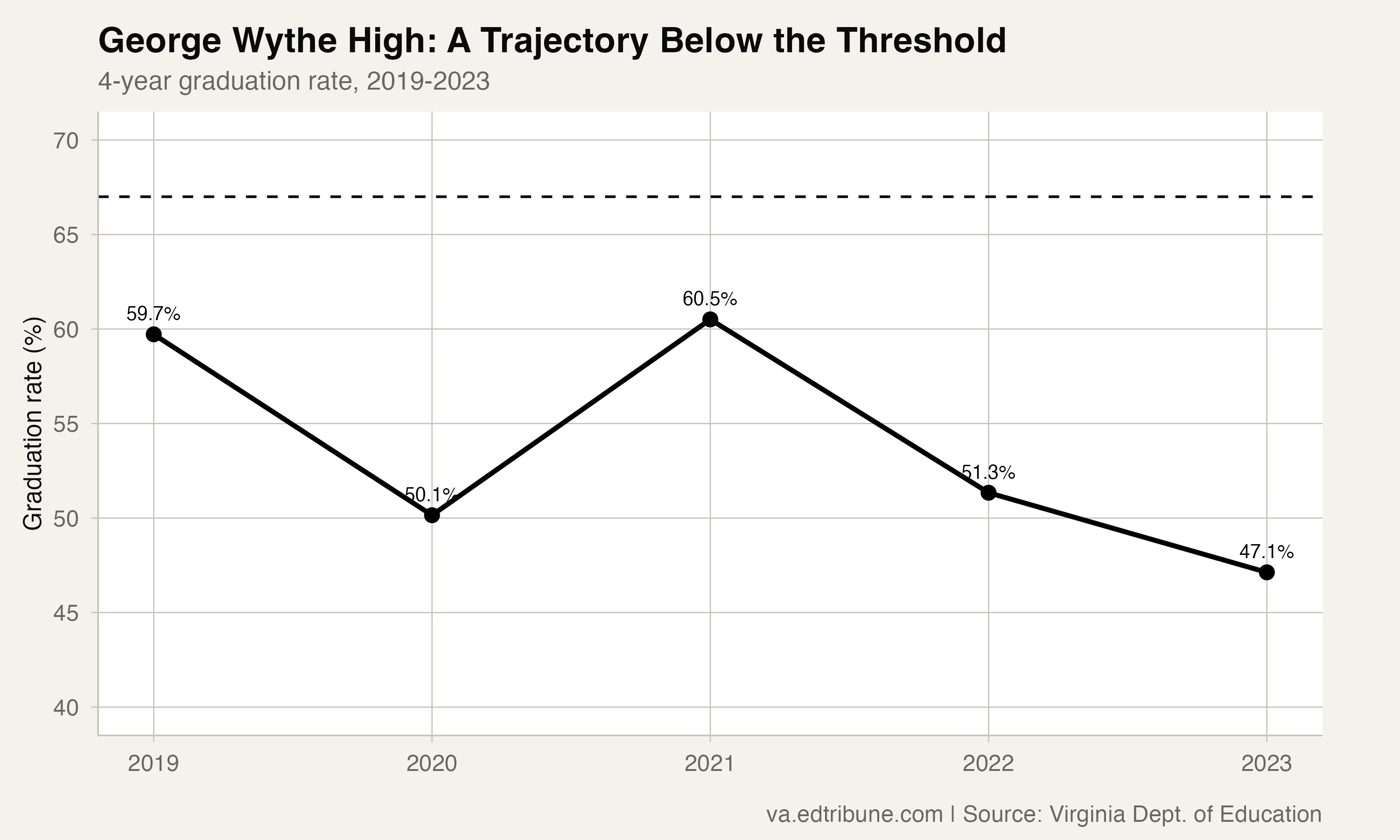
The school's trajectory has been moving in the wrong direction. Its graduation rate was 59.7% in 2019, bounced to 60.5% during the COVID-flexibility year of 2021, then fell to 51.3% in 2022 and 47.1% in 2023. The federal Comprehensive Support and Improvement threshold is 67%. George Wythe has been below it every year in the data.
There is a hopeful footnote. The school was renamed Richmond High School for the Arts in 2024, and local reporting suggests the new iteration improved to 61.5% that year, partly through new bilingual programs including the Con Ganas! initiative and bilingual LIEP tutoring. That improvement is not yet reflected in state data.
The Division-Level Picture
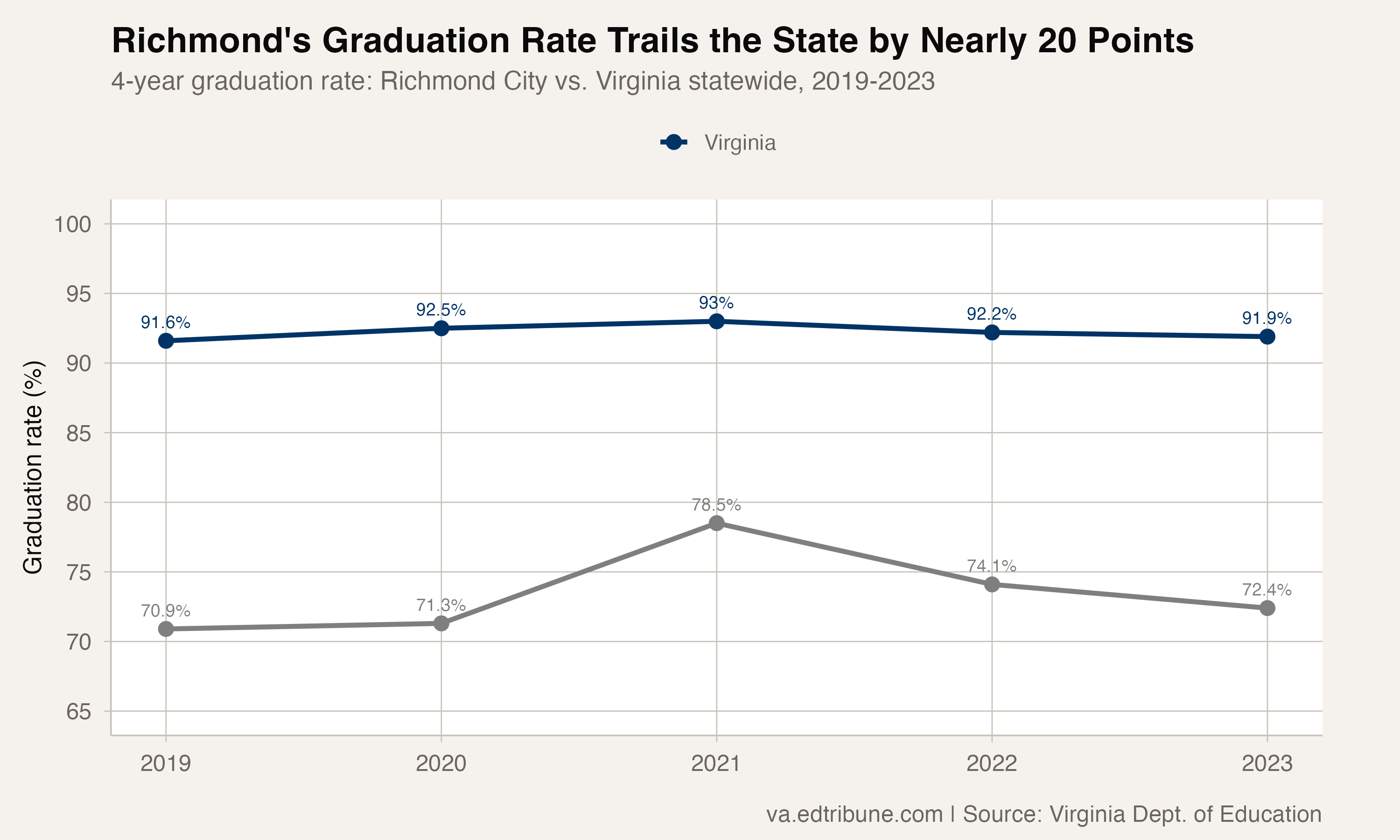
Richmond's trajectory since 2019 shows a COVID bump that gave everything back. The division rose from 70.9% in 2019 to 78.5% in 2021, the year of relaxed requirements. Then it fell to 72.4% in 2023, nearly erasing the gains entirely.
The gap to the state widened from 20.7 points in 2019 to 19.5 in 2023. Richmond posted the lowest graduation rate of any Virginia division in four of the five years, the only exception being the pandemic-flexibility year of 2021. In 2023 it ranked last among the state's 130 divisions.
School by School
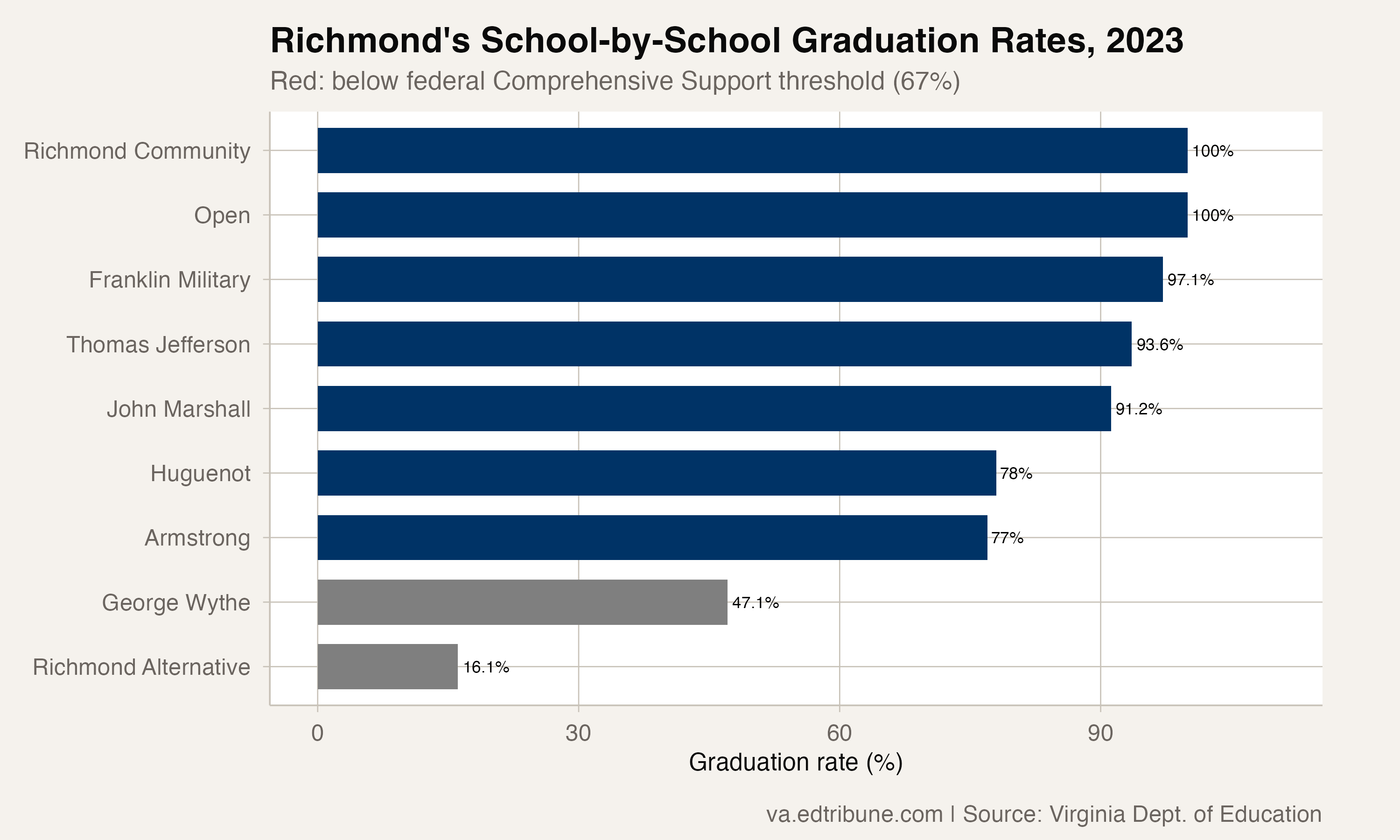
The variation within Richmond is enormous. Some schools approach or exceed the state average while others sit below the federal intervention threshold. The students at the bottom of this chart attend schools where the system is not getting most of them to a diploma.
Richmond's superintendent has pointed to new programs and wraparound services as reasons for optimism. The 2024 data will show whether those investments are reaching the schools that need them most.
Detailed code that reproduces the analysis and figures in this article is available exclusively to EdTribune subscribers.
Discussion
Sign in to join the discussion.
Loading comments...